
Learning
Experiences

Each of the following experiences culminates as evidence of my ongoing growth as an educator.
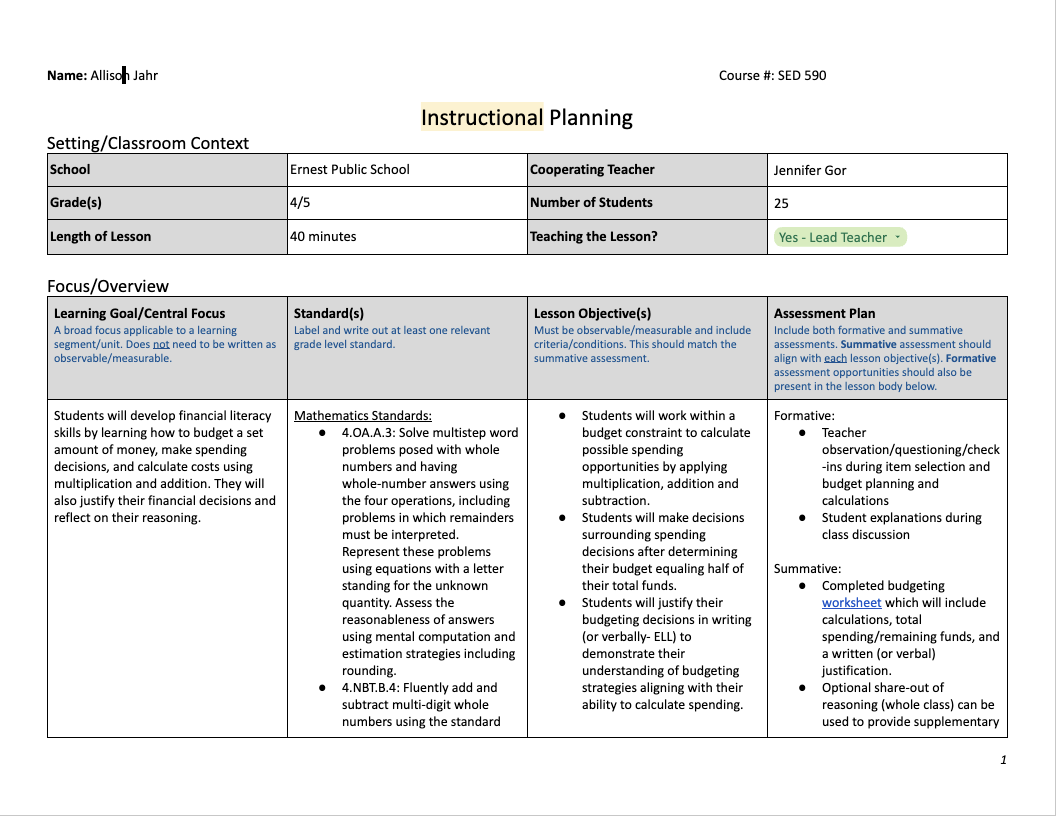
Financial Literacy Lesson Plan: Budgeting for Grades 4/5
This lesson plan aimed to engage students in real-world problem-solving through a hands-on budgeting activity. It joined teachings in mathematics and financial literacy, through the exploration of culturally-relatable application of core numeracy skills. I designed this activity with various scaffolded supports to ensure accessibility for all learners. Various opportunities were explored during this lesson to make cultural connections: Students tied this lesson into their understanding of receiving money, offering cultural celebration examples such as Eid, Diwali, and Chinese New Year.
This artifact aligns with InTASC #8 (Instructional Strategies), CEC Standard 4 (Using Assessment to Understand Learners and Environment), and HLP 15 (Provide Scaffolded Supports). Here, I demonstrate how carefully sequenced instruction and (handmade) tangible materials can promote engagement and understanding. Further, it demonstrates how culturally relevant content connects learning to students’ lived experiences.
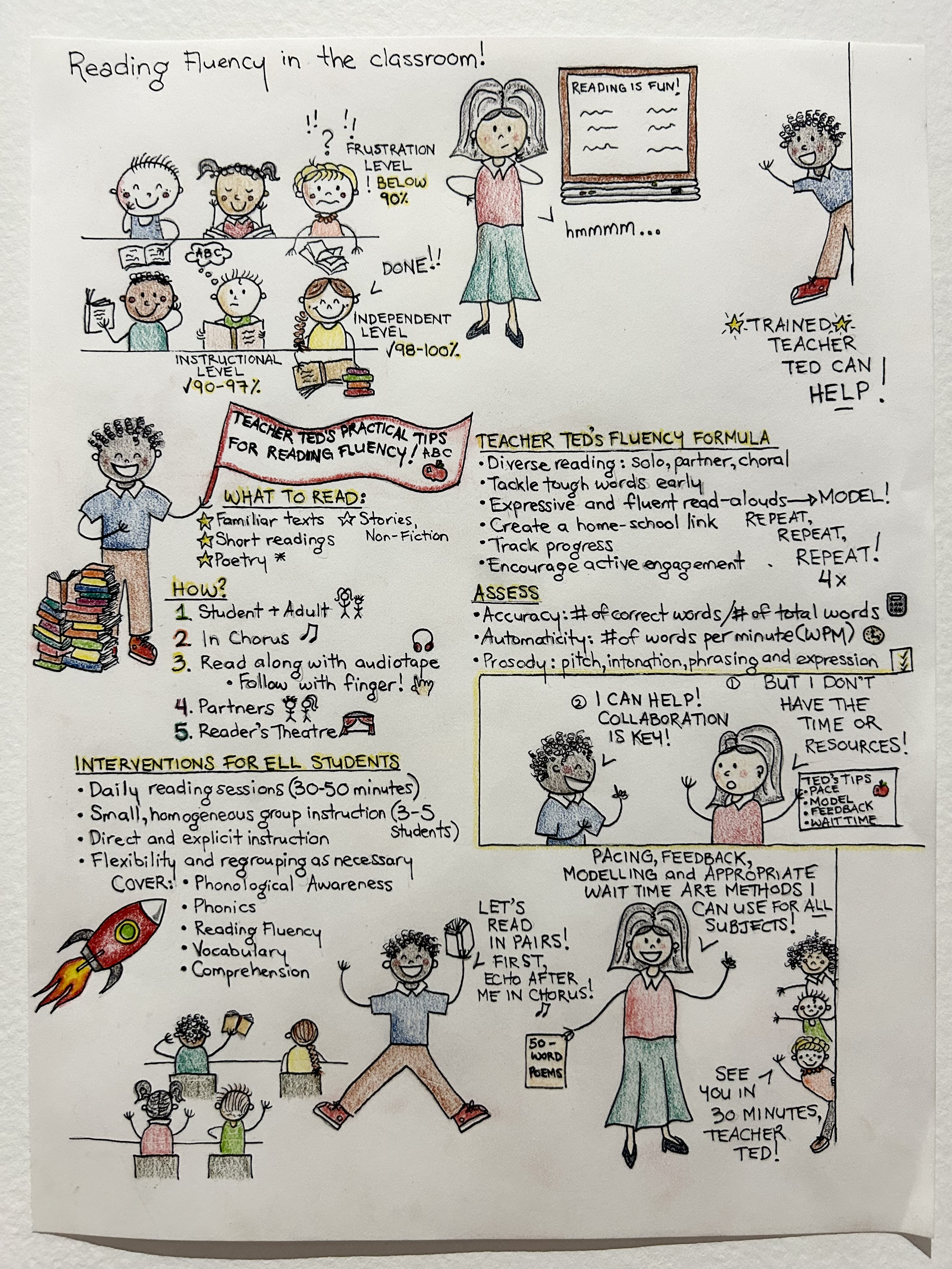
Literacy Instruction One-Pager: Principles of Inclusive Reading Design
My one-pager synthesizes the principles of inclusive literacy instruction, with a particular focus on differentiation, phonemic awareness, and comprehension strategies that are grounded in Universal Design for Learning (UDL). This artifact reflects my understanding of how literacy can be made accessible to diverse learners through imagery, intentional scaffolds and multimodal supports.
This artifact aligns with InTASC #4 (Content Knowledge), CEC Standard 5 (Instructional Planning and Strategies), and HLP 15 (Provide Scaffolded Supports). This piece demonstrates an ability to channel theory into relatable, classroom-ready content. It also serves to demonstrate my value in providing equitable literacy instruction that aims to empower all students to develop confidence as readers.
Wakelet Collection: Exploring Food Authenticity through Digital Curation
This digital portfolio (created through the Wakelet platform) showcases an experiential inquiry project exploring the meaning of food authenticity and culture. This platform allowed me to create multimodally, incorporating reflections, videos, embedded links and peer discussions (through Reddit) while, too, embedding accessibility through its Immersive Reader function. This project shows how students and teacher alike can engage in cross-disciplinary inquiry using digital tools that are both inclusive and visually engaging.
This artifact aligns with InTASC #7 (Planning for Instruction), CEC Standard 2 (Learning Differences), and HLP 13 (Adapt Curriculum Tasks and Materials). It demonstrates how technology can expand access to content, amplify student voice and prepare them for future technology usage.
Assistive Technology in Education: Universal Access, Barriers, and Teacher Readiness
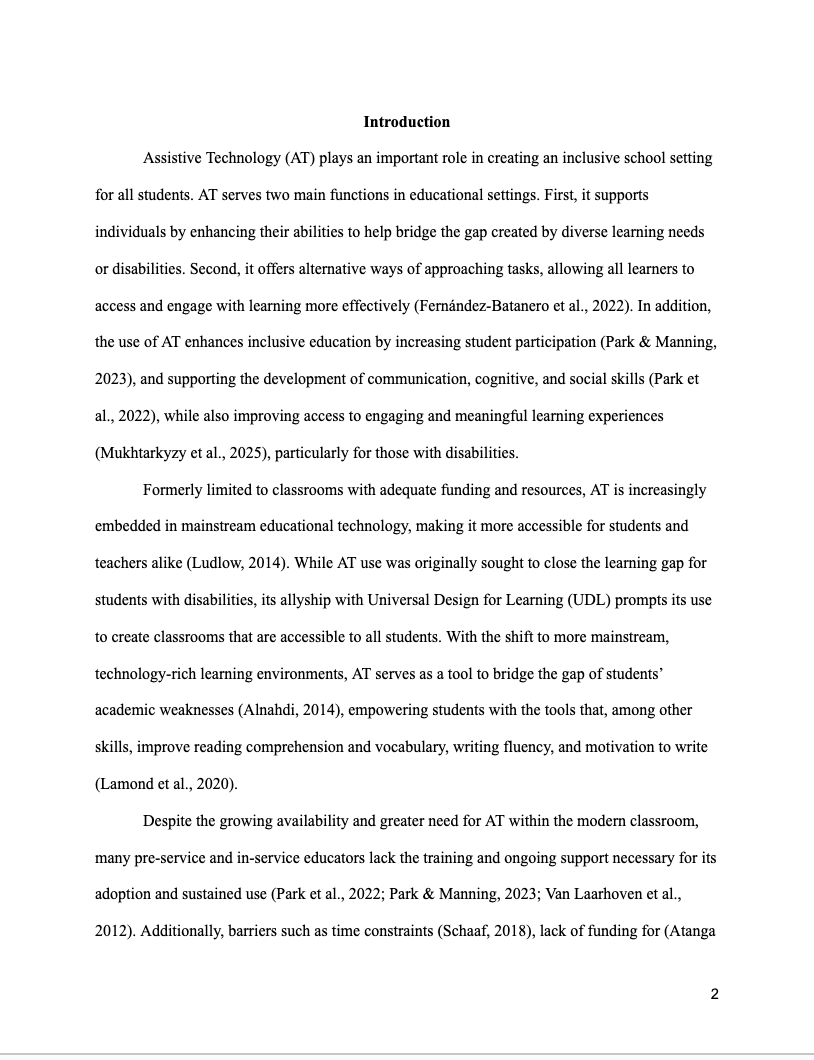
This paper explores the intersection of Assistive Technology (AT) and Universal Design for Learning (UDL) in promoting equitable, inclusive classrooms. This paper was written in response to course readings and current research, examining systemic barriers to AT implementation such as teacher readiness, access inequities, and the need for embedded AT within mainstream EdTech (a particular passion of mine). The paper highlights how AT benefits all students, not only those with disabilities, by supporting diverse learning pathways and promoting digital accessibility.
This artifact aligns with InTASC Standard 2 (Learning Differences), CEC Standard 5 (Instructional Planning and Strategies), and HLP 19 (Use of Assistive and Instructional Technology). This work demonstrates my ability to analyze instructional tools through the lens of inclusion. Further, it reinforces my belief that technology should be intentionally and equitably designed and implemented in order to reduce barriers and enhance participation for all learners.
PROFESSIONAL DEVELOPMENT
-
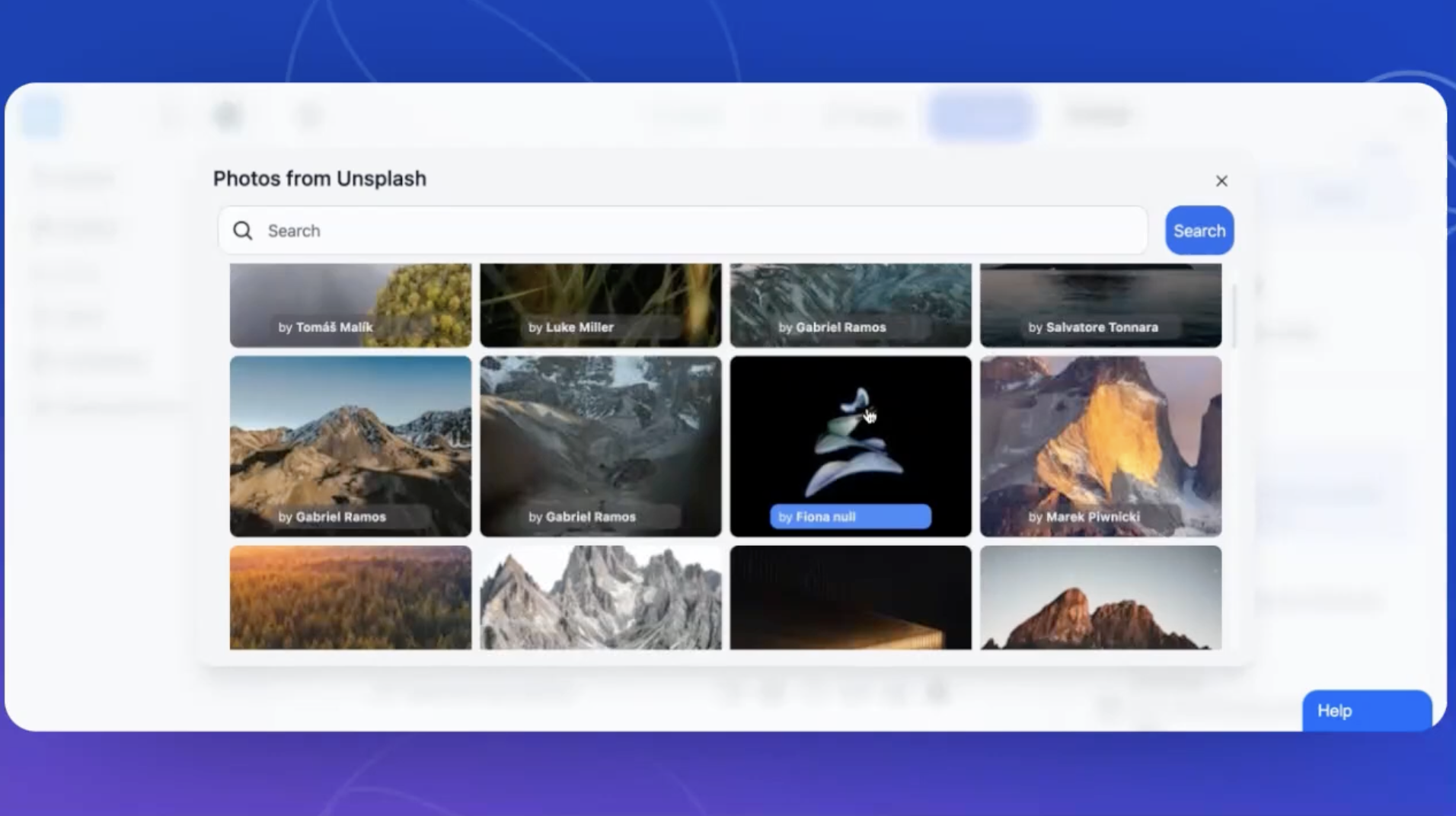
Wakelet EdTech Tool Talk: Enhancing Accessibility with Immersive Reader
This EdTech tutorial was created for SED 601: Equitable and Accessible Educational Technology, and it explores the integration of Wakelet as an educator’s tool for collaboration, knowledge organization, and accessibility. Here, I explore the Immersive Reader feature and demonstrate how this embedded assistive technology can help to promote inclusion in the classroom and literacy support for all learners. In the development and creation of this artifact, I gained experience in designing and delivering professional development that incorporates creativity and digital equity.
This artifact aligns with InTASC Standards #9 and #10 (Professional Learning & Leadership/Collaboration), CEC Standards 1 and 7 (Ethical Practice & Collaboration), and HLP 19 (Use Assistive and Instructional Technologies). Here, I demonstrate both my technical fluency and a commitment to providing accessible digital learning environments.
-
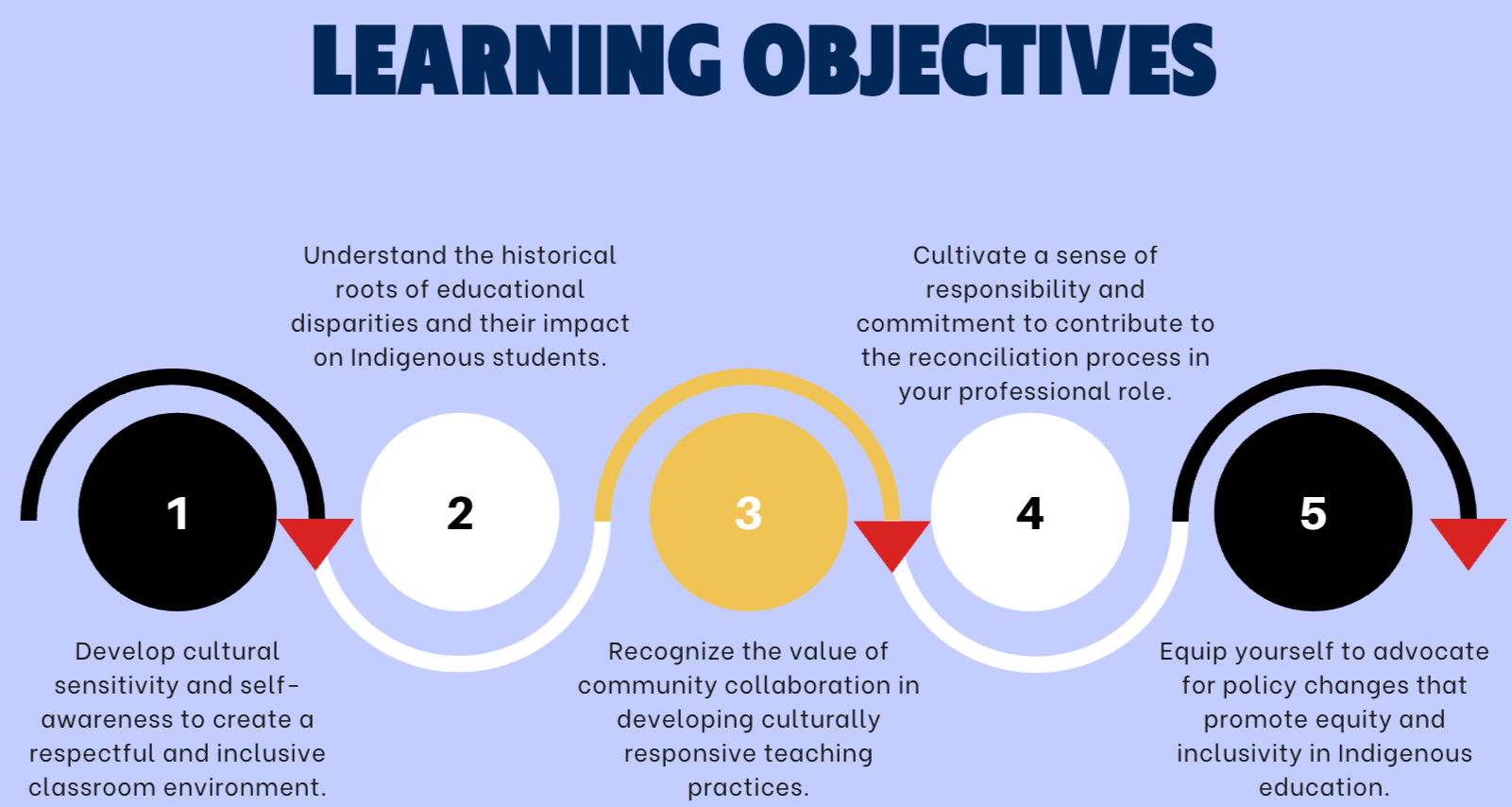
A Look into Indigenous Educational Law in Canada and Teaching to Make Change
This professional development presentation explored Indigenous educational law in Canada and the role of all educators in facilitating reconciliation efforts and social (educational) change. This artifact was designed for SED 602: Equity & Social Justice in Education Law, Policy, and Practice. It explores the historical context of residential schooling, the Truth and Reconciliation Commission’s Calls to Action, and legislative milestones that continue to shape present-day policy. The presentation acts as an invitation to educators to reflect critically on their practice and consider how curriculum, intentional planning and teaching can make further strides toward reconciliation within schools.
This artifact is aligned with InTASC Standard #10 (Leadership and Collaboration), CEC Standard 6 (Professional Learning and Ethical Practice), and HLP 1 (Collaborate with Professionals to Increase Student Success). This presentation is a reflection of professional growth, particularly in the domains of culturally responsive teaching and advocacy. Additionally, it demonstrates my commitment to integrating historical awareness and empathy into the classroom with the goal of creating meaningful systemic change.